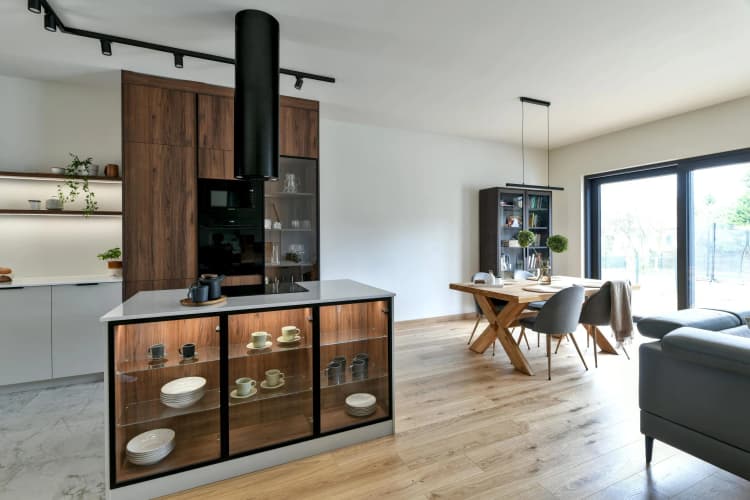
The Granaria project meets the expectations of contemporary residents of Gdansk while preserving the historical heritage. As part of the investment, modern apartments, commercial spaces, and retail outlets are being built, with historic warehouses preserved and restored, paying tribute to the rich history of this place.
Island of Warehouses, located in the heart of Gdansk, has a long history dating back to the Middle Ages. Since the 13th century, when Gdansk was an important trading port on the Baltic route, warehouses were built on the island for storing grains, salt, spices, and other goods. These imposing buildings, constructed from characteristic regional brick material, were a symbol of the city's power and significance in global trade.
Over the centuries, Island of Warehouses underwent numerous changes. During the Hanseatic period, Gdansk became an important trading hub, and warehouses on the island played a crucial role in gathering and distributing goods. In later years, due to various historical events, Island of Warehouses suffered damage and reconstruction. During the post-war period, it was a part of Gdansk that underwent various transformations, and historic warehouses were neglected.
In this context, the Granaria project was born. In the 1990s, Gdansk decided to revitalize Island of Warehouses to restore its former glory and vitality. It was within this initiative that the idea of Granaria was conceived.